This post was originally send out to my newsletter subscribers. The newsletter documents all my updates and imrpovements to the Lego Sorting bot. It is an almost monthly newsletter (in practice, I send out about 6 newsletters per year). You can read previous editions here, or you can subscribe using the form below.
Hello LEGO enthusiasts,
Welcome to the latest update on the progress of my automated LEGO sorting machine! Although this mail does not contain any major updates, I’m really excited about the possibilities of the new hardware.
Hardware Update: Raspberry Pi Integration
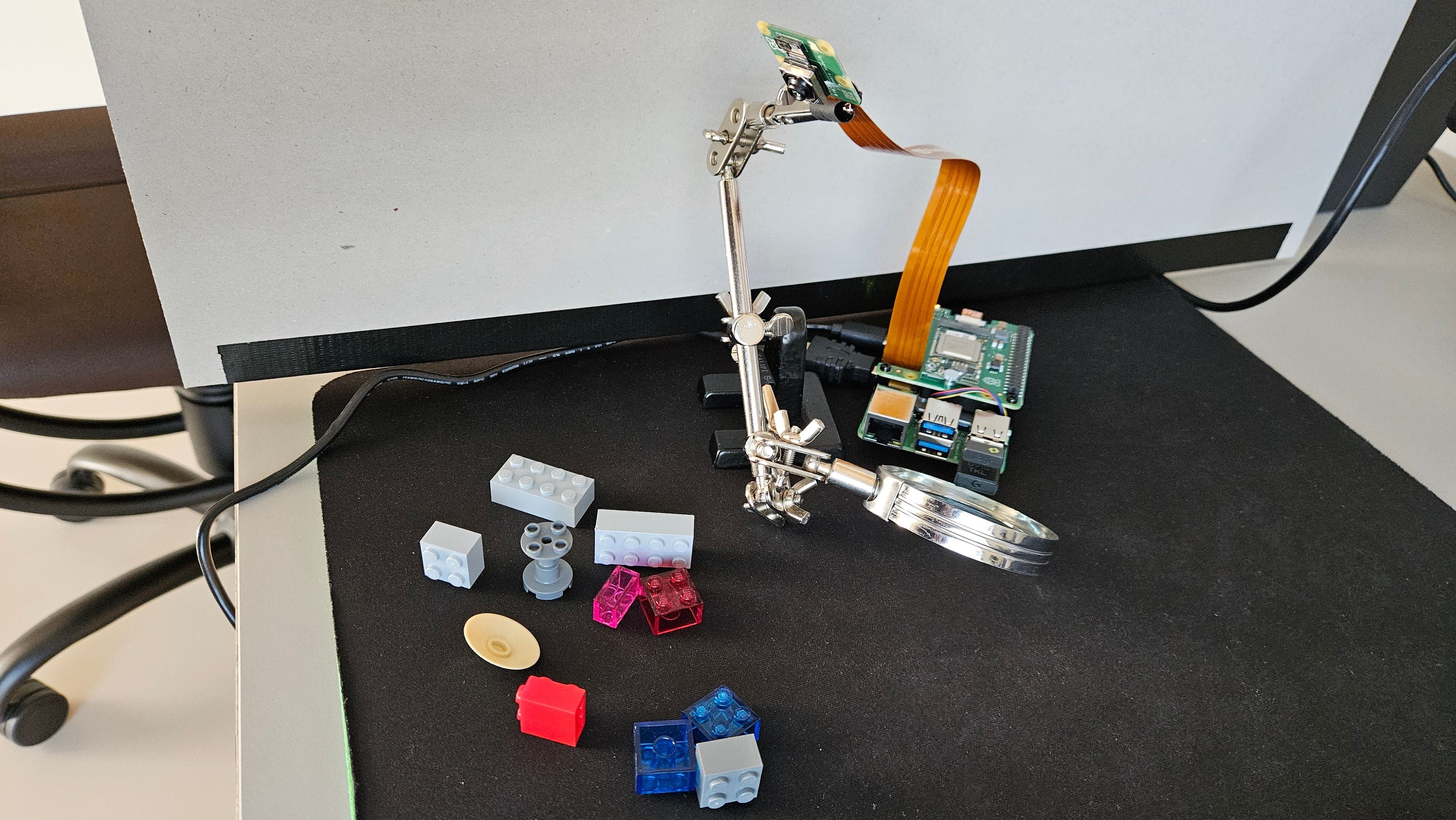
In my ongoing quest to streamline the system, I’ve been exploring the possibility of running the AI model directly on the Raspberry Pi 5, eliminating the need for a desktop PC. Fortunately, the recent release of an AI kit, designed specifically for the Raspberry Pi, now makes this possible.
I received the AI kit in late August, and installation was smooth and straightforward. However, here are a few key points to keep in mind if you’re considering a similar setup:
-
The Raspberry Pi 5 uses a new camera connector, so not all older cameras may be compatible and you will, for sure, need a conversion cable (only a few dollars).
-
It’s a good idea to get the active cooler for the Raspberry Pi 5 to avoid overheating.
-
Many AI examples won’t run remotely, so I recommend connecting a screen, mouse, and keyboard directly to the Pi.
Learning and Next Steps
While getting the existing AI examples up and running was relatively easy, extending them or developing custom models is more complex due to limited documentation. In the next few weeks, I’ll be diving into the following areas:
-
GStreamer Pipelines: Learning the basics to optimize performance, as the AI kit integrates with GStreamer.
-
Model Training: Retraining existing models using the Hailo AI stick, which is central to this new kit.
-
Custom Model Creation: Developing a custom AI model with the Hailo software suite.
-
Remote Development: Exploring RTSP streaming from the Raspberry Pi via GStreamer and Video4Linux to improve remote development workflows.
-
Camera Mounting: Finding a better camera mounting solution (hopefully with 3D-printable options) and testing the high-quality camera.
I’ll keep you updated as I continue to work through these challenges and discoveries.
Stay tuned for more updates!
Best,
Peter